Kshitimaa Renewable Solutions
0%

Our technology, explained

No "solar kit" line items. Here is exactly what we install on your roof, why we chose it, and what to check before you sign with anyone.

Technically transparent

A solar plant is a 25-year electrical installation on your roof

Two quotations for "5 kW solar" can be completely different systems. The modules, the inverter technology, the steel and the protection decide how much power you get in year 15, whether the structure survives the monsoon, and whether the system is safe. So we explain every part — and we list each one, by brand and rating, in your quotation.

Solar modules on a rooftop01 · Modules
Generation

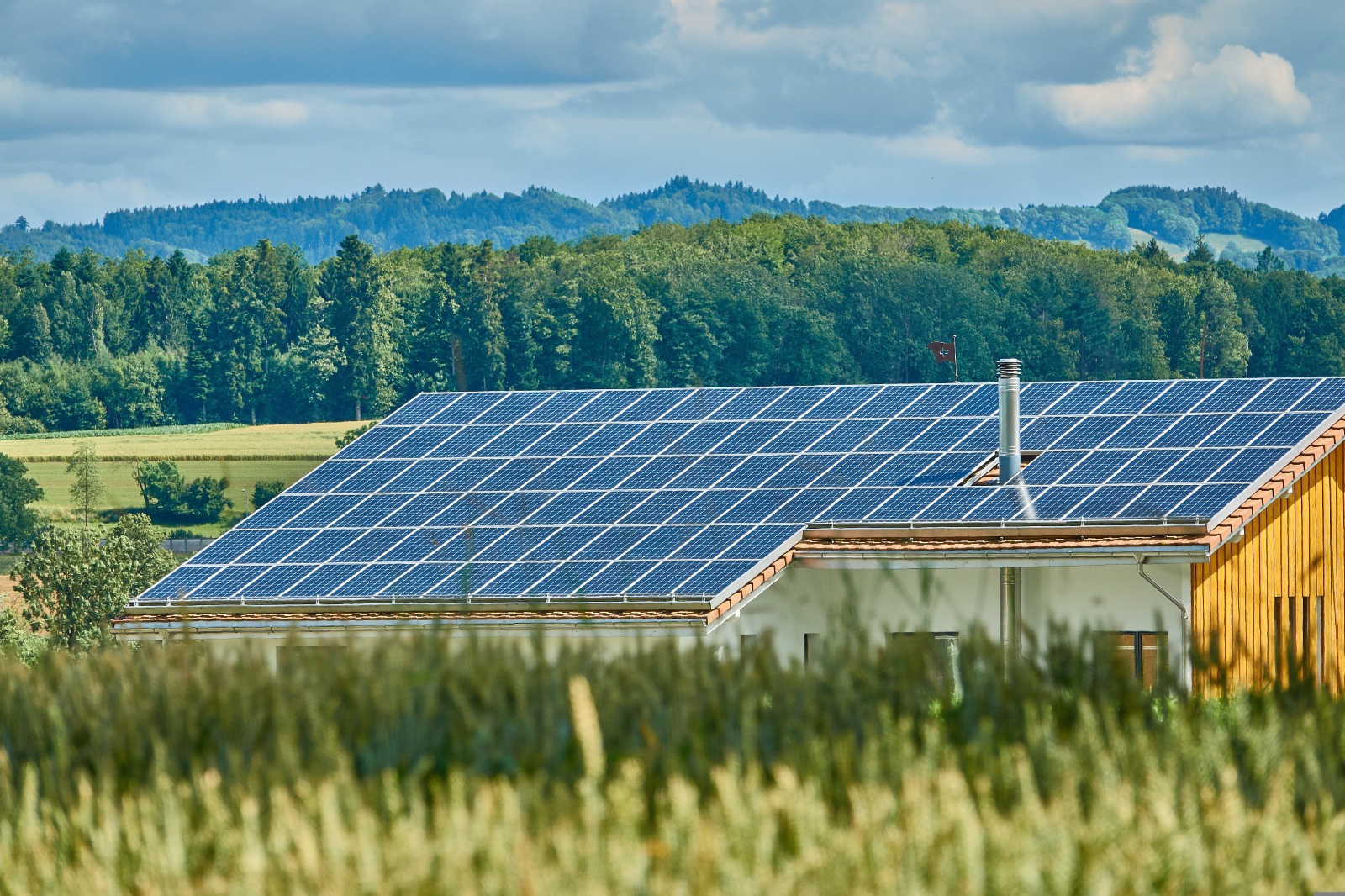
TOPCon bifacial modules

TOPCon (Tunnel Oxide Passivated Contact) is an N-type cell technology. Compared with older P-type PERC cells it typically offers higher efficiency, a better temperature coefficient for hot rooftops and lower long-term degradation. Bifacial modules also collect light reflected onto their rear side — especially useful on elevated structures over light-coloured terraces.

Cell technologyN-type TOPCon, half-cut
ConstructionBifacial (glass-glass / transparent back)
ComplianceALMM-listed; DCR modules for subsidy projects
RatingSelected per design (high-wattage class)
WarrantyManufacturer product + linear performance warranty

Our approach: rear-side gain depends on structure height and roof surface, so we design for it rather than promise a fixed bonus figure.
Inverter and wiring on a rooftop system02 · Conversion
Power electronics

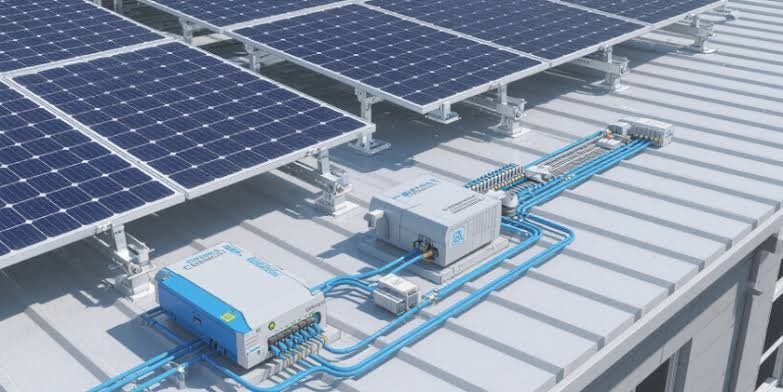
Premium microinverters

A microinverter sits under the modules and converts DC to AC right at the panel. Each module (or pair) gets its own maximum power point tracking, so partial shade from a water tank, a tree or a neighbour's wall only affects that panel — not the whole string. The roof carries low-voltage AC instead of long high-voltage DC strings.

MPPTPer module / per pair
Roof wiringAC trunk cable — no high-voltage DC strings
MonitoringPanel-level generation on a mobile app
ExpansionAdd modules later without changing the inverter
WarrantyLong manufacturer warranty (per brand)

Where a string inverter still makes sense: large, shade-free commercial roofs. We will tell you which option fits — and show you the numbers.

Elevated mounting structure on a terrace03 · Structure
Mechanical

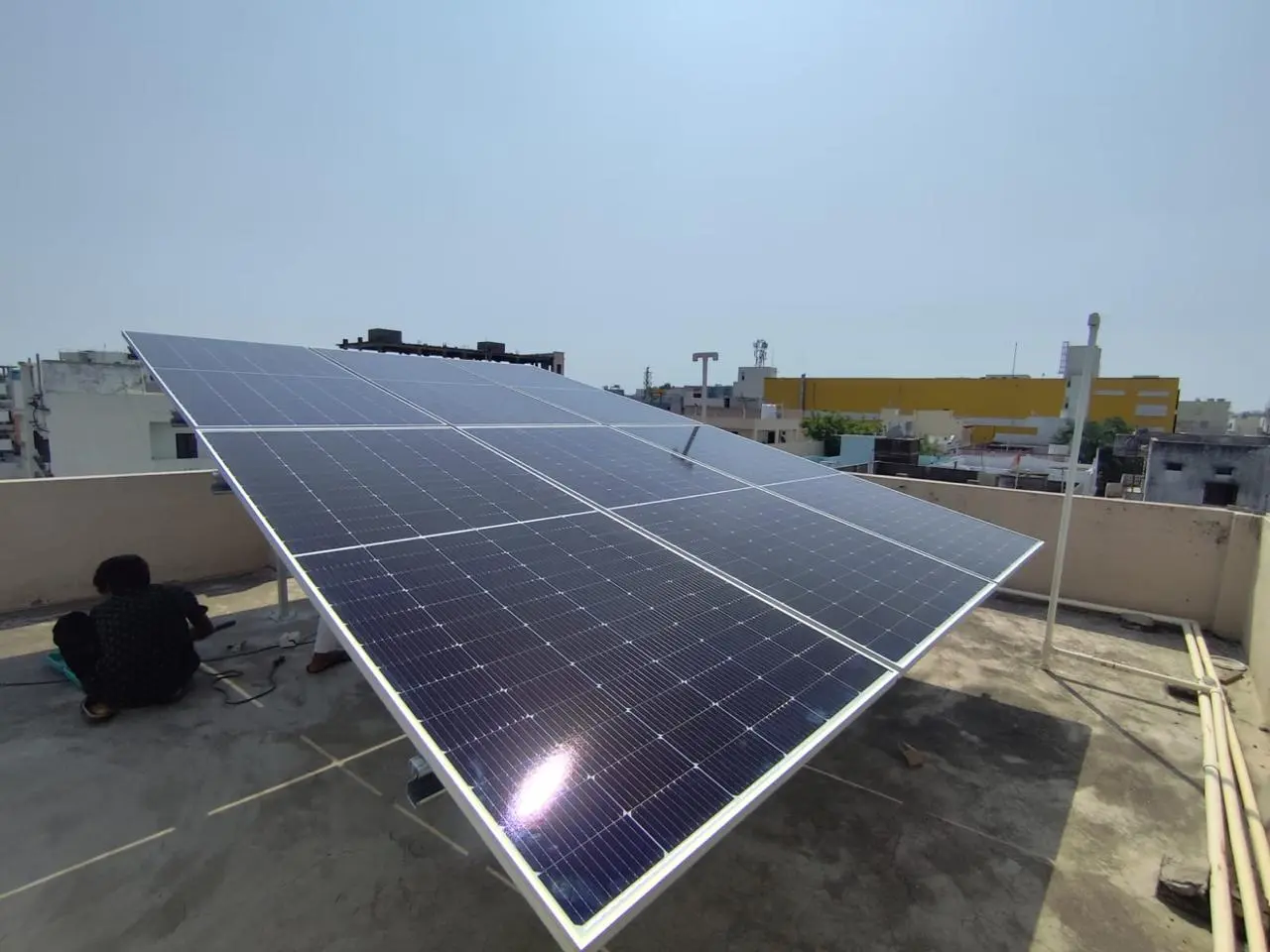
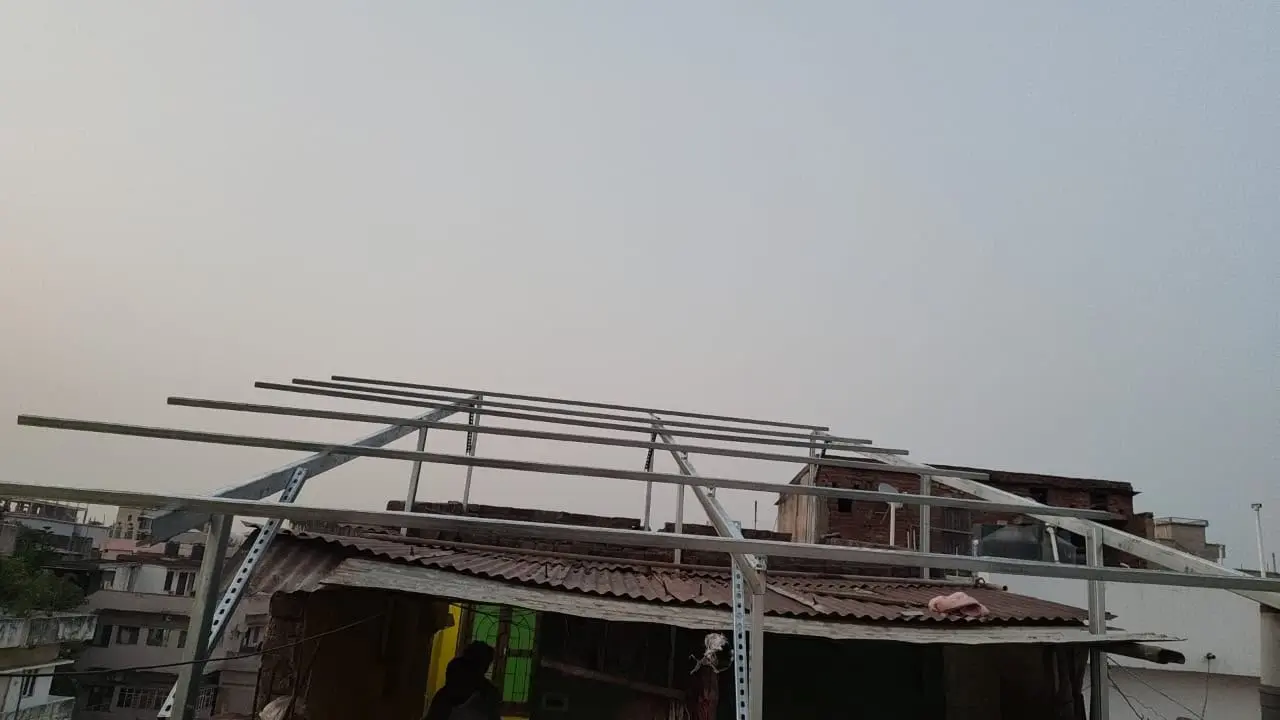
HDGI / ZAM mounting structures

The structure has to hold hundreds of kilos of glass against the wind for 25 years and more. We use hot-dip galvanised iron (HDGI) — steel galvanised after fabrication so every cut and hole is coated — or ZAM (zinc-aluminium-magnesium) coated steel, whose coating protects cut edges far better than ordinary galvanising. Painted mild steel and thin pre-galvanised sections are not used.

MaterialHDGI or ZAM-coated steel
DesignWind-load based (IS 875 Part 3 approach)
FastenersStainless steel / hot-dip galvanised
FixingAnchored to RCC; leak-proof roof penetrations
OptionsStandard tilt or elevated (terrace stays usable)

Why it matters: a module warranty is worthless if the structure rusts or lifts in year eight.

04 · Safety

Protection, earthing & cabling — done by the book

The parts nobody photographs are the ones that keep your home safe. We follow MNRE guidelines and the relevant electrical standards on every circuit.

ACDB with surge protection

Surge protection device, MCB / isolator and proper enclosure between the solar system and your main panel.

SPD · MCB · isolator

Dedicated earthing

Separate earth pits for system earthing and lightning protection, with resistance values tested and recorded.

Tested & documented

Lightning arrester

Lightning protection sized for your roof and the array footprint, bonded to its own earth.

Site-specific

Copper cabling

UV-resistant, correctly sized copper cables run in conduits / trays — no loose wires across the terrace.

Low losses · neat routing
05 · Grid connection

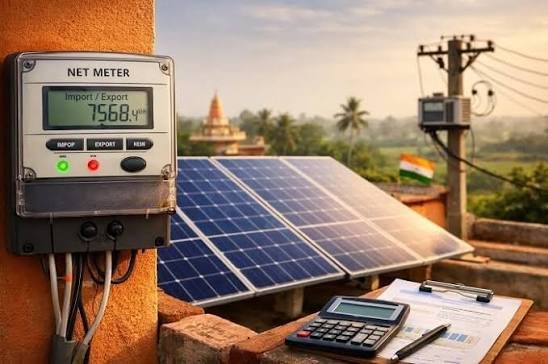
Monitoring and HESCOM net-metering

Your system is connected to the HESCOM grid through a bi-directional net meter. Units you export during the day are recorded and set off against units you import at night, as per the applicable HESCOM / KERC rules. With microinverters you also see each panel's generation live on your phone.

  • Feasibility and net-metering application filed by us
  • HESCOM inspection coordinated and attended
  • Bi-directional net meter installed and sealed
  • Commissioning documents uploaded for subsidy redemption
Net meter next to a rooftop solar system
Compare

String inverter or microinverters?

Both are proven technologies. For typical home rooftops with water tanks, parapets and partial shade, microinverters usually win.

String inverterMicroinverters
Shade on one panelCan pull down the output of the whole stringOnly that panel is affected
Voltage on the roofHigh-voltage DC stringsLow-voltage AC
MonitoringSystem levelEvery panel, live on your phone
Single point of failureOne inverter — the whole plant stopsOne unit — the rest keep generating
Adding panels laterLimited by inverter sizeAdd modules with matching units
Upfront costLowerHigher — repaid through yield, safety and uptime
Before you sign

Questions to ask any solar installer

Ask us these too. A good installer answers every one in writing.

Which exact module and inverter brand and model?

“Tier-1 panels” is not a model number. The quotation should name the manufacturer, model, wattage and quantity — and the modules should be ALMM-listed (DCR for subsidy).

What is the structure made of, and what thickness?

Ask whether it is HDGI (galvanised after fabrication), ZAM or just painted / pre-galvanised steel, and how it is anchored to your roof.

What protection and earthing are included?

Look for surge protection, isolators, separate earth pits and a lightning arrester — and ask for the earthing test values at handover.

Who files HESCOM net-metering and the subsidy?

If it is “you”, factor in the time. With us, it is part of the scope until the subsidy reaches your bank.

What is the realistic generation per year?

Ask for an estimate based on your roof's orientation and shade, not a brochure figure — and how you will be able to check it.

Who do I call in year five?

Ask who services the system after installation, and how warranty claims are handled across module and inverter brands.

See it on your own roof

Book a free survey — we will show you the layout, the components and the numbers, in writing.